Key Takeaways
- Barren and sterile geopolitical boundaries both describe uninhabited or non-productive borderlands but differ significantly in legal and practical implications.
- Barren territories often lack natural resources and are typically inhospitable, influencing their strategic and administrative status.
- Sterile zones are usually established through treaties or agreements to restrict sovereignty claims or military presence.
- The designation of an area as barren or sterile affects international relations, border disputes, and resource management.
- Understanding the nuanced differences between these terms aids in interpreting geopolitical tensions and agreements involving borderlands.
What is Barren?
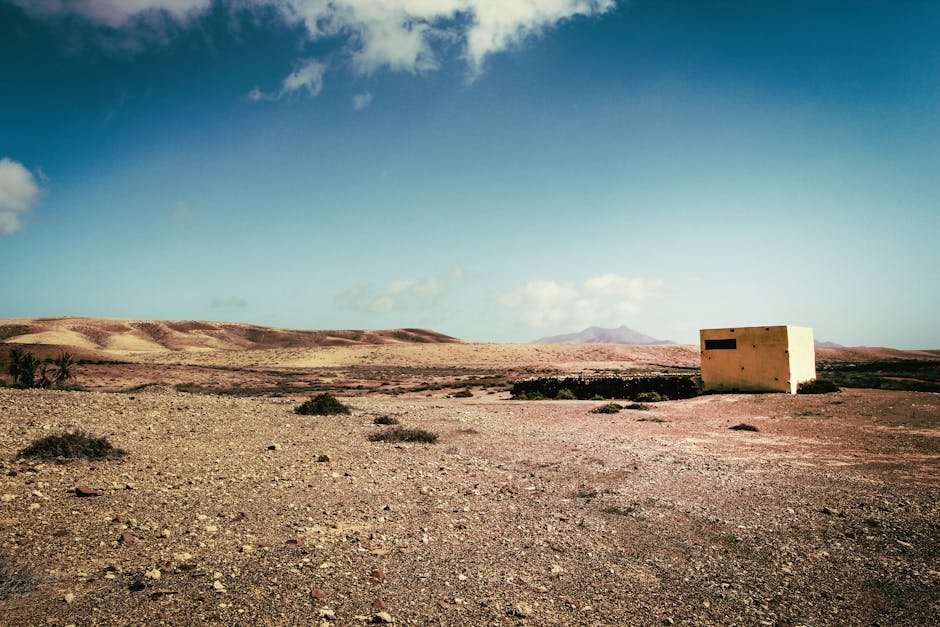
Table of Contents
Barren in a geopolitical context refers to a territory or boundary zone that is devoid of significant vegetation, population, or economic activity. These areas are often characterized by their harsh environmental conditions, making sustained habitation or development difficult.
Environmental Characteristics of Barren Zones
Barren geopolitical boundaries are often located in extreme climates such as deserts, high-altitude plateaus, or arctic tundras. These environmental factors result in a scarcity of water, vegetation, and arable land, which naturally limits human settlement and economic exploitation.
For example, the border regions between some Central Asian countries often feature barren landscapes with minimal vegetation, influencing how these countries manage and patrol their boundaries. The natural barrenness of these areas often discourages large-scale infrastructure development and population establishment.
Strategic and Military Implications
Barren borders can serve as natural buffers between rival states due to their inhospitable nature, reducing the likelihood of conflict escalation. However, their remoteness can also pose challenges for effective border monitoring and control, necessitating specialized surveillance methods.
The barren stretch between India and China in the Himalayas exemplifies how difficult terrain shapes military deployments and logistical planning along such boundaries. Despite limited human presence, these zones remain strategically significant for national security considerations.
Legal and Administrative Status
Barren territories may fall under clear sovereignty but often lack formal administrative infrastructure due to the inability to support permanent settlements. This can lead to ambiguous governance, especially in regions where multiple states have overlapping claims on barren land.
The case of the barren borderlands in the Sahara Desert illustrates how states sometimes establish provisional administrative measures to assert control without significant investment. Legal frameworks may emphasize environmental protection or military presence rather than civilian governance.
Economic and Resource Considerations
While barren areas are generally seen as economically unproductive, they can sometimes harbor valuable mineral resources or strategic minerals beneath the surface. Exploration in such regions is often limited by the harsh conditions, but discoveries can alter geopolitical calculations dramatically.
The barren border areas in parts of the Middle East, for instance, have attracted interest due to potential oil and gas reserves despite their surface desolation. This dual nature complicates the management and contestation of barren geopolitical zones.
What is Sterile?

Sterile zones in geopolitics refer to demilitarized or non-sovereign buffer regions established through bilateral or multilateral agreements. These territories are intentionally left free of military installations, civilian settlements, or economic exploitation to reduce tensions between neighboring states.
Origins and Purpose of Sterile Zones
Sterile areas often arise from peace treaties or ceasefire agreements designed to prevent accidental conflicts or disputes over sensitive borderlands. Their creation reflects a mutual recognition of the need for a neutral space to stabilize contested regions.
The Korean Demilitarized Zone (DMZ) is a quintessential example of a sterile zone, established to separate North and South Korea following the armistice agreement. This zone is devoid of civilian settlements and military presence, functioning as a buffer to maintain peace.
Legal Frameworks Governing Sterile Areas
Sterile zones are typically governed by international law or specific bilateral agreements that restrict sovereignty claims within their boundaries. These legal arrangements prohibit permanent civilian habitation, military buildup, and sometimes resource extraction.
The Sinai Peninsula’s sterile buffer zones, established under Egypt-Israel peace accords, showcase how legal treaties can enforce neutrality and demilitarization over contested territories. Such agreements often include provisions for international monitoring and enforcement.
Impact on Border Management and Security
While sterile zones reduce direct confrontation, they also create unique challenges in border management, requiring joint oversight or international peacekeeping forces. The absence of sovereign control complicates enforcement against illicit activities such as smuggling or illegal crossings.
In the case of the UN Buffer Zone in Cyprus, the sterile area is patrolled by international forces to maintain peace between conflicting communities. This arrangement highlights the delicate balance between neutrality and security in sterile zones.
Socioeconomic and Environmental Aspects
Sterile zones are often devoid of civilian economic activity by design, leading to distinct ecological outcomes compared to surrounding inhabited regions. In some cases, the lack of human interference has resulted in the unexpected preservation of local flora and fauna.
The Korean DMZ, for example, has become an inadvertent wildlife sanctuary due to restrictions on development and human presence. This ecological phenomenon contrasts with the often deteriorated environmental conditions seen in barren zones.
Comparison Table
The following table highlights critical aspects that differentiate barren and sterile geopolitical boundaries.
| Parameter of Comparison | Barren | Sterile |
|---|---|---|
| Nature of Territory | Inhospitable and naturally unproductive landforms | Deliberately designated neutral or demilitarized areas |
| Human Presence | Minimal due to environmental constraints | Restricted or prohibited by legal agreement |
| Origin | Natural environmental conditions | Result of political treaties or ceasefires |
| Legal Status | Often ambiguous or limited governance | Clearly defined by international or bilateral law |
| Military Activity | Limited due to terrain difficulty | Explicitly banned or controlled |
| Economic Exploitation | Rare and constrained by nature | Usually forbidden to maintain neutrality |
| Strategic Importance | Natural barriers influencing defense postures | Buffer zones reducing conflict risk |
| Environmental Impact | Harsh conditions limit biodiversity | Often preserves ecosystems due to lack of human activity |
| Examples | High-altitude Himalayas borderlands | Korean Demilitarized Zone (DMZ) |
Key Differences
- Origin of Status — Barren areas are naturally desolate by environmental factors, whereas sterile zones are politically created to serve peacekeeping functions.
- Legal Recognition — Sterile zones have formalized legal frameworks restricting use, unlike barren zones which often lack explicit governance.
- Military Restrictions — Military presence is commonly prohibited in sterile zones, whereas barren zones may still see limited military activity despite harsh conditions.
- Human Activity — Civilian settlement is generally absent in both, but sterile zones are intentionally kept free of economic or residential development by treaty.
- Environmental Consequences — Sterile zones can inadvertently protect ecosystems due to inactivity, while barren zones are naturally limited in biodiversity due to environmental harshness.
FAQs
Can barren and sterile zones overlap in the same geographic area?
Yes, a geographic region can be both barren and sterile if it naturally lacks habitation and is also designated by treaty as a demilitarized or neutral zone. Such overlap intensifies the area’s isolation and strategic significance