Key Takeaways
- Destroyers and battleships serve distinct strategic roles within naval power projection, tailored by size, speed, and armament.
- Destroyers are versatile, fast, and designed for escort and anti-submarine warfare, while battleships emphasize heavy artillery and armor for surface dominance.
- The evolution of naval warfare shifted the importance from battleships to destroyers due to changing threat environments and technological advancements.
- Destroyers typically operate within carrier strike groups or task forces, offering multi-dimensional defense, whereas battleships historically served as capital ships for direct bombardment.
- Modern naval strategy favors destroyers for their adaptability, whereas battleships have become largely obsolete in contemporary fleets.
What is Destroyer?
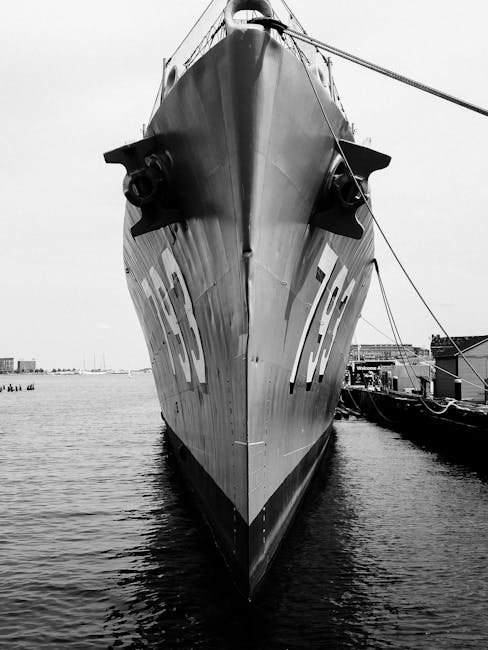
Table of Contents
A destroyer is a fast, maneuverable warship primarily designed to escort larger vessels and defend them against smaller, agile threats such as submarines and aircraft. It plays a crucial role in modern naval operations by providing versatile offensive and defensive capabilities.
Design and Agility
Destroyers are engineered for speed and agility, allowing them to respond quickly to threats or reposition in battle. Their relatively smaller size compared to battleships grants them superior maneuverability in various maritime conditions.
These ships usually displace between 6,000 to 10,000 tons, striking a balance between endurance and rapid deployment. This size facilitates operations in littoral zones and open oceans alike, increasing their operational flexibility.
Advanced propulsion systems, such as gas turbines, enable destroyers to reach speeds exceeding 30 knots. This speed advantage is critical for escort duties and evading enemy fire or torpedoes during combat.
Armament and Capabilities
Destroyers carry a diverse array of weapons including anti-ship missiles, anti-aircraft missiles, torpedoes, and naval guns. This multi-layered armament allows them to engage threats from submarines, surface vessels, and aircraft effectively.
Modern destroyers often feature vertical launch systems (VLS) capable of firing Tomahawk cruise missiles for long-range strikes. This offensive capability extends their reach significantly beyond traditional naval gunfire.
Anti-submarine warfare (ASW) is a core mission, supported by sonar arrays, helicopters, and depth charges. These tools enable destroyers to detect and neutralize underwater threats before they can endanger larger fleet components.
Role in Fleet Operations
Destroyers commonly serve as escorts for aircraft carriers, amphibious assault ships, and supply vessels, providing protective screens against missile, air, and submarine attacks. This role is essential for maintaining the operational integrity of the larger fleet assets.
They also conduct independent missions such as maritime patrol, interdiction, and surface warfare. Their versatility permits deployment in a wide range of maritime security and combat scenarios, adapting quickly to evolving threats.
Destroyers are integral to modern naval task forces, often coordinating with other ships and aircraft to deliver layered defense. This networked approach enhances situational awareness and maximizes combat effectiveness.
What is Battleship?

A battleship is a large, heavily armored warship equipped with powerful naval artillery designed to dominate surface combat. Historically, battleships were the centerpiece of naval fleets, projecting immense firepower and survivability.
Armor and Firepower
Battleships feature thick steel armor plating designed to withstand direct hits from enemy shells and torpedoes. This heavy protection made them formidable adversaries capable of withstanding sustained bombardment.
Their primary armament consists of multiple large-caliber guns, often exceeding 14 inches in diameter, mounted in turrets for long-range naval gunfire. These guns could engage enemy ships or shore installations with devastating effect.
Secondary batteries, including smaller caliber guns, provided defense against smaller vessels and aircraft. However, the primary offensive strategy relied heavily on the battleship’s main guns and armored resilience.
Strategic Role and Deployment
Battleships were traditionally deployed as capital ships to assert naval dominance and protect sea lanes. Their presence often served as a deterrent, signaling a nation’s maritime strength and willingness to engage in direct confrontations.
These vessels were instrumental in shore bombardments during amphibious operations, providing critical fire support for troops landing on hostile coasts. Their ability to deliver sustained artillery fire made them valuable in pre-aircraft carrier eras.
The large crew complement and extensive logistical support required for battleships limited their operational flexibility. They were often confined to fleet actions rather than rapid deployment or escort missions.
Decline in Modern Navies
The rise of air power and missile technology reduced the strategic value of battleships, as aircraft carriers and submarines became dominant platforms. Battleships became increasingly vulnerable to long-range missile strikes and air attacks.
Many navies retired or repurposed their battleships by the late 20th century, with some preserved as museum ships. Their role has been largely supplanted by multi-role surface combatants and missile-equipped vessels.
Despite their decline, battleships remain symbols of naval heritage and technological achievement, representing a bygone era of maritime warfare. Some modern warships draw inspiration from battleship design principles, particularly in terms of firepower concentration.
Comparison Table
The following table highlights key distinctions between destroyers and battleships across various operational and technical parameters.
| Parameter of Comparison | Destroyer | Battleship |
|---|---|---|
| Displacement | 6,000–10,000 tons | 30,000–70,000+ tons |
| Speed | 30+ knots, highly agile | 20–25 knots, slower maneuvering |
| Main Armament | Missiles, torpedoes, 5-inch guns | Large-caliber naval guns (14–18 inch) |
| Armor | Light to moderate, optimized for speed | Extensive thick armor plating |
| Primary Mission | Escort, anti-submarine, multi-threat defense | Surface combat, shore bombardment |
| Crew Size | 150–300 personnel | 800–2,000+ personnel |
| Operational Range | 4,000–6,000 nautical miles | 7,000+ nautical miles with extensive logistical support |
| Modern Usage | Active frontline warships, key fleet components | Mostly decommissioned or museum exhibits |
| Survivability Focus | Speed and electronic warfare systems | Heavy armor and damage resilience |
| Support Requirements | Lower logistical demand, quicker refit | High maintenance and extensive support needed |
Key Differences
- Operational Versatility — Destroyers operate across a broader range of missions including anti-submarine, air defense, and surface warfare, unlike battleships that were mainly focused on gunfire supremacy.
- Speed and Maneuverability — Destroyers are significantly faster and more maneuverable, allowing rapid reaction to threats compared to the slower, heavily armored battleships.
- Technological Evolution — Destroyers have integrated modern missile systems and electronic warfare, while battleships relied primarily on artillery and armor.
- Fleet Integration — Destroyers typically function as protective escorts within carrier groups, whereas battleships served as independent capital ships commanding fleet engagements.
- Crew and Operational Costs