Key Takeaways
- Outmost refers to the absolute outermost geographical boundary or edge of a country’s territory, often involving maritime or land extremities.
- Utmost denotes the greatest extent of territorial reach or influence a nation can assert, including strategic zones beyond immediate borders.
- Outmost boundaries are typically fixed physical points, while utmost boundaries are more conceptual and can be linked to political, military, or economic spheres.
- Disputes over outmost borders frequently involve sovereignty claims, whereas utmost concerns often relate to strategic dominance or international law interpretations.
- Understanding both terms is crucial for analyzing border negotiations, maritime claims, and geopolitical strategies in contested regions.
What is Outmost?
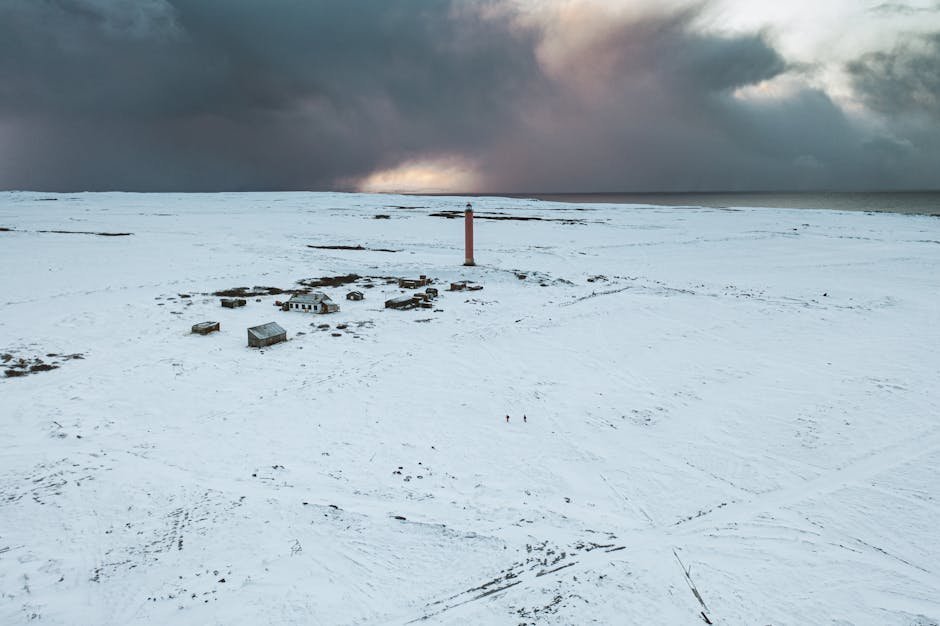
Table of Contents
Outmost refers to the furthest physical boundary or extremity of a nation’s geographic territory. It often involves demarcation of land borders, islands, or maritime edges that define a state’s spatial limits.
Physical Extremities in Geography
Outmost points serve as the tangible edges of a country’s land or sea territory. For example, the outmost island of a country may determine the baseline for maritime claims under international law. These points are critical for mapping and establishing clear jurisdictional boundaries, especially in regions with complex geography.
Countries often identify outmost territories such as peninsulas, capes, or distant islands to assert sovereignty. This delineation affects resource rights, security zones, and navigation controls in adjacent waters.
In the Arctic and Antarctic, outmost points have gained importance as melting ice reveals new potential boundaries. Nations are actively monitoring and claiming these extremities to expand their recognized territorial limits.
Legal Significance of Outmost Borders
Outmost boundaries form the foundation for legal definitions of sovereign territory under international treaties. The United Nations Convention on the Law of the Sea (UNCLOS) uses these points to calculate Exclusive Economic Zones (EEZs) extending 200 nautical miles from a nation’s coast.
Disputes over outmost borders often arise when physical markers are ambiguous or when natural changes, such as erosion or sedimentation, alter coastlines. Such disputes have led to international arbitration or bilateral negotiations to resolve conflicting claims.
In many cases, outmost territories become flashpoints in geopolitical tensions, particularly in archipelagic regions or contested island chains. The South China Sea is a prominent example where outmost island claims affect control over vast maritime areas.
Strategic Importance of Outmost Locations
Outmost points can host military installations, surveillance posts, or navigation aids vital for national security. Their remote nature often makes them challenging to access but valuable for early warning and defense.
Control over outmost territories can influence regional power balances, allowing states to project influence or control shipping lanes. For instance, controlling outmost islands in a strait can enable a country to monitor or restrict maritime traffic.
The strategic value is heightened when outmost locations sit near chokepoints or resource-rich zones. States invest in infrastructure and patrols to maintain their sovereignty and deter encroachment.
Environmental and Economic Implications
Outmost territories often include ecologically sensitive areas such as coral reefs, mangroves, and exclusive marine habitats. Protecting these zones is essential for biodiversity and sustainable resource management.
Economic activities like fishing, offshore drilling, and tourism are closely tied to the security and stability of outmost boundaries. Countries leverage these areas to boost local economies while balancing environmental concerns.
Climate change impacts on outmost coasts, including rising sea levels, pose challenges to territorial integrity and economic interests. Governments are increasingly focused on adaptive measures to safeguard these vital frontiers.
What is Utmost?

Utmost denotes the greatest extent or highest degree of territorial reach a state can exert, encompassing not only physical borders but also zones of influence. It reflects a nation’s maximal geopolitical ambition or strategic range beyond mere geography.
Conceptual Reach Beyond Borders
Utmost refers to a country’s maximum sphere of influence, which may include military presence, economic zones, or diplomatic sway beyond its immediate frontiers. This concept transcends physical boundaries and involves power projection on regional or global scales.
For example, naval fleets operating far from home waters illustrate utmost territorial reach, extending influence through mobility and force. Such capacity enables states to protect interests or allies even in distant geographies.
Utmost reach often includes contested zones where sovereignty is ambiguous but strategic stakes are high. The ability to assert control or influence in these areas can define a country’s regional dominance.
Role in Geopolitical Strategy
Utmost territorial extent plays a key role in national security doctrines, shaping defense postures and alliance formations. States plan deployments and bases to maximize their strategic footprint and preempt adversaries.
Geopolitical theories like “sea power” or “buffer zones” hinge on the notion of utmost reach, emphasizing control over critical chokepoints or hinterlands. These ideas inform foreign policy decisions and military planning.
Countries with global ambitions develop utmost capabilities through power projection assets such as aircraft carriers, long-range missiles, or satellite surveillance. These tools enable sustained presence and influence far beyond traditional borders.
International Law and Utmost Influence
While outmost borders are legally defined, utmost influence often falls into gray areas of international law. Concepts like freedom of navigation or airspace rights relate to how far a state can assert control without violating sovereignty.
Disputes may emerge when a country’s utmost claims infringe upon another’s territorial integrity or economic zones. Resolving these issues requires diplomatic negotiation, treaties, or adjudication in international courts.
Norms governing utmost reach are evolving with technology and geopolitical shifts, challenging traditional understandings of territorial limits. Cyber and space domains add new dimensions to the idea of utmost influence.
Economic and Resource Dimensions of Utmost
Utmost territorial influence enables access to resources such as offshore oil fields, fisheries, and trade routes beyond immediate borders. Controlling these assets is vital for national prosperity and energy security.
States often establish exclusive economic zones or special economic partnerships to extend their economic reach to utmost limits. These arrangements enhance trade opportunities and resource management on a regional scale.
Competition over utmost economic zones can lead to tensions, especially in resource-rich maritime areas. Multilateral cooperation and joint development agreements sometimes mitigate conflicts by sharing benefits.
Comparison Table
The table below highlights critical distinctions and overlaps between Outmost and Utmost in geopolitical boundary contexts.
| Parameter of Comparison | Outmost | Utmost |
|---|---|---|
| Definition | Furthest physical territorial point marking national borders | Greatest extent of territorial influence or reach |
| Nature | Concrete geographic extremity | Abstract strategic or political concept |
| Scope | Limited to tangible land or maritime boundaries | Includes zones of influence beyond borders |
| Legal Basis | Defined by treaties and international law (e.g., UNCLOS) | Negotiated or contested, often lacking fixed legal status |
| Examples | Remote islands, coastal capes, border landmarks | Naval patrol areas, buffer zones, spheres of influence |
| Dispute Type | Territorial sovereignty conflicts | Strategic dominance or influence struggles |
| Geopolitical Impact | Determines jurisdiction and resource rights | Shapes military posture and alliance dynamics |
| Environmental Concerns | Focus on protecting physical territory and habitats | Includes managing influence over shared or contested regions |